Cape Town is one of the best places in the world to learn to kitesurf. The wind is reliable for six months of the year, the beaches are wide and sandy, there's a whole industry of experienced instructors, and when you're not on the water you're in one of the most beautiful cities on earth. We're Khaya, a kite house eight minutes' walk from Kite Beach in Bloubergstrand, and every season we watch dozens of guests go from never having touched a kite to riding upwind. So here's everything we tell them before they arrive, all in one place.
Why learn in Bloubergstrand
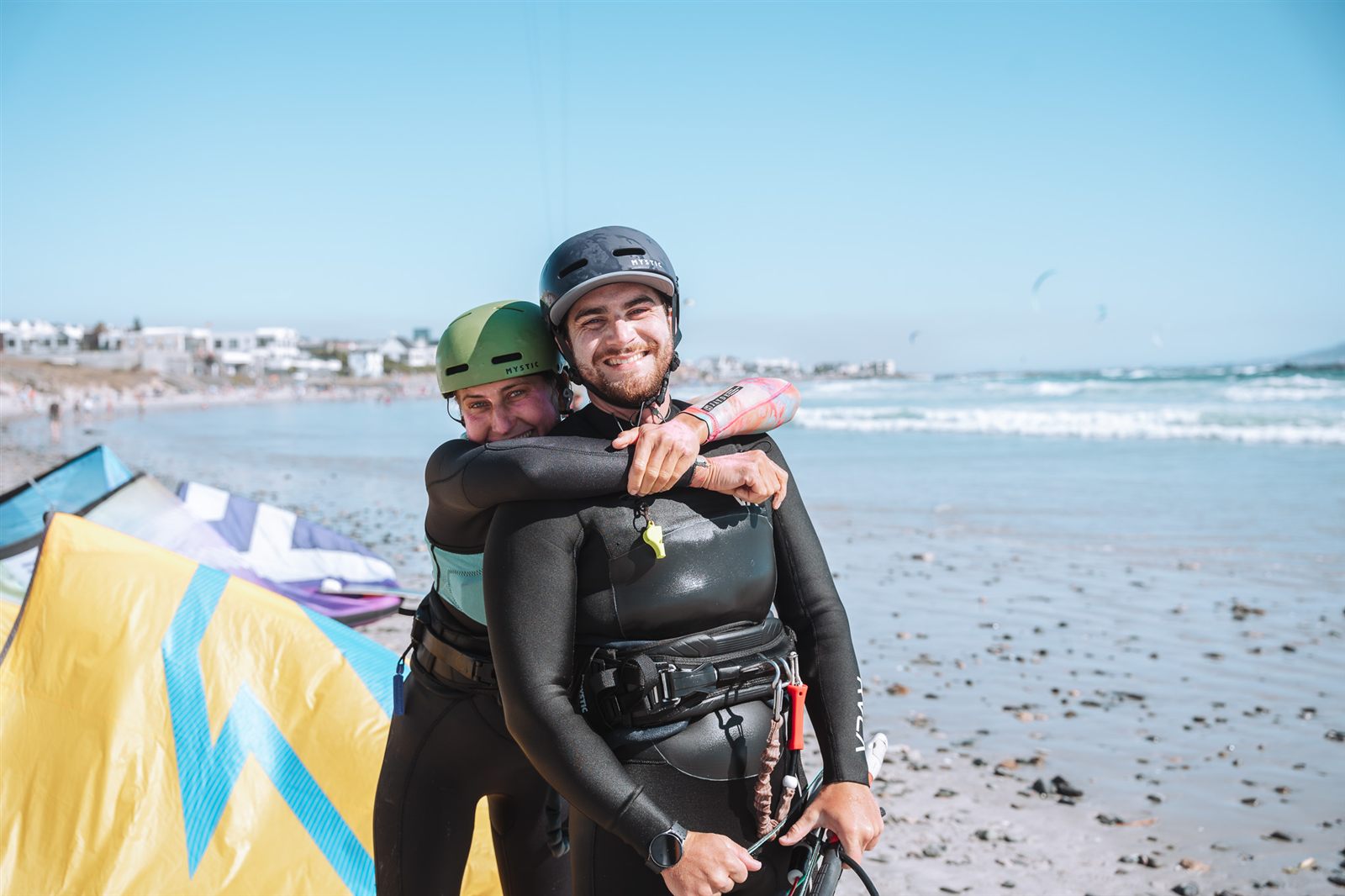
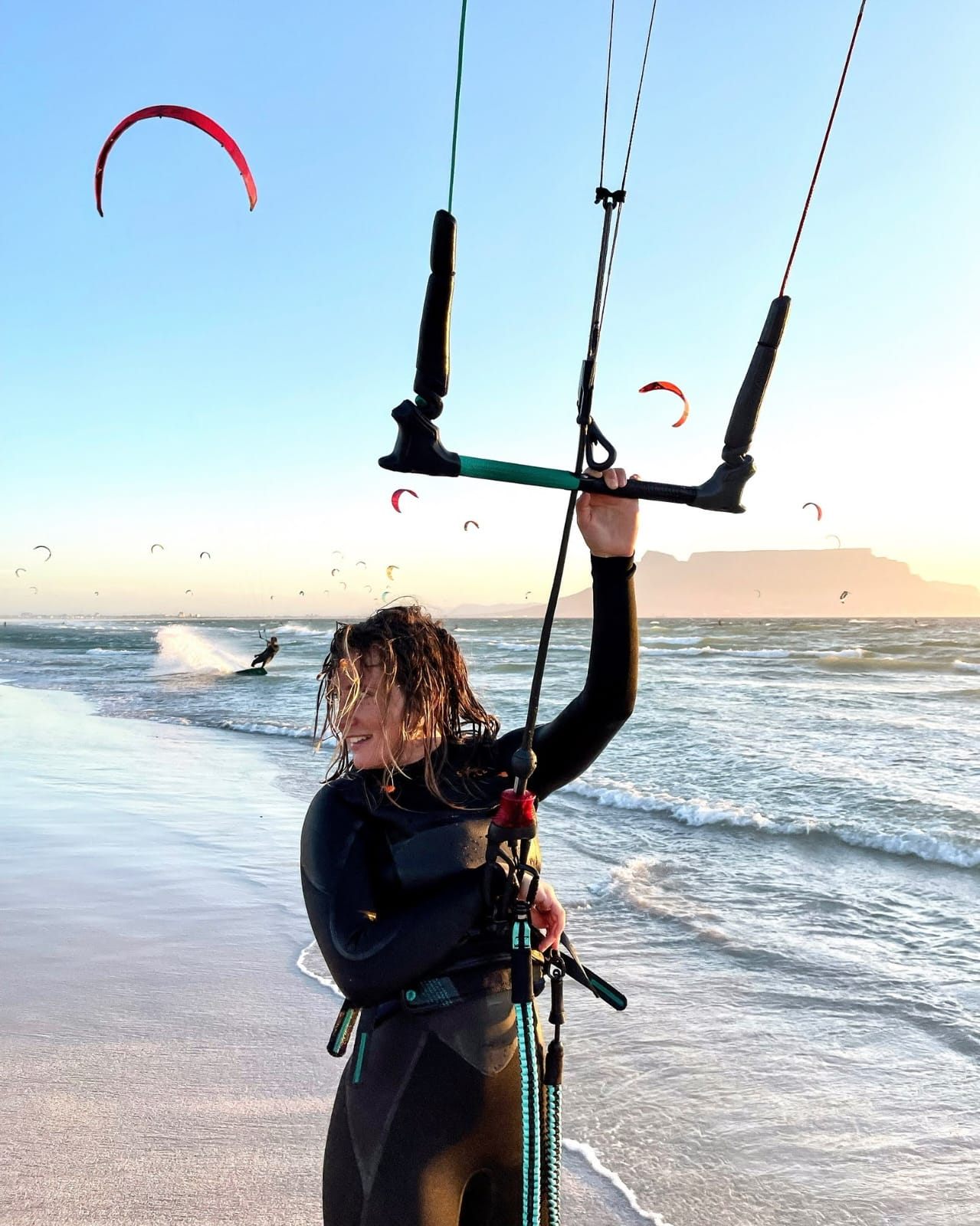
Bloubergstrand, or just "Blouberg", is the heart of the Cape Town kite scene. It sits 20 to 25 minutes north of the city and gets the famous south-easterly Cape Doctor wind, which blows cross-shore across a long, sandy beach with plenty of room to set up. The kite schools and shops are all here, along with hundreds of riders of every level, which makes it a motivating place to learn. On a good afternoon you'll be practising your body-drag while the world's best are training for the Red Bull King of the Air a few hundred metres downwind.
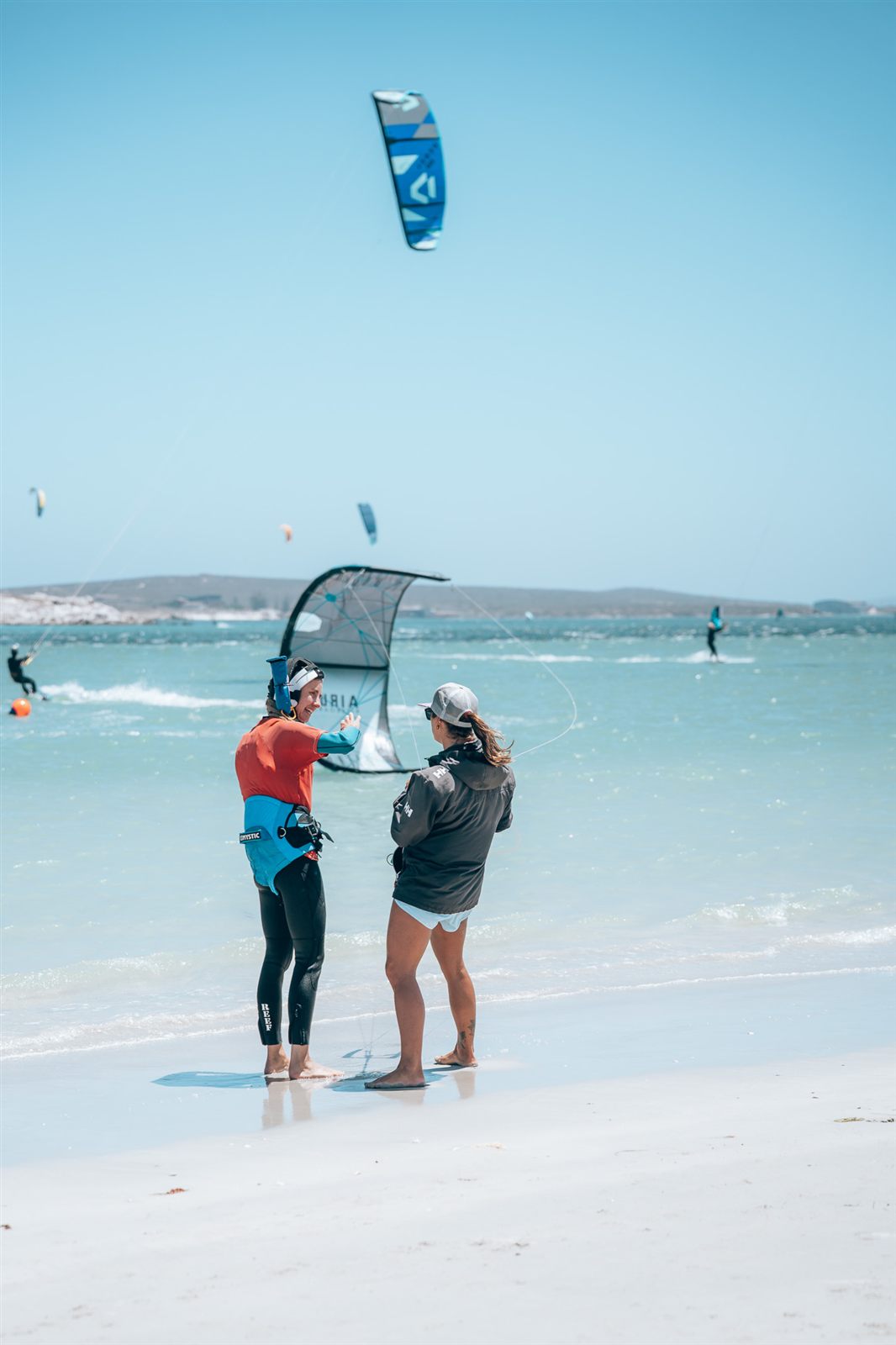
The Blouberg beaches do have waves and a shore break, so many instructors take complete beginners to flat water for the first sessions: Shark Bay or the lagoon at Langebaan, about 1 hour 15 minutes up the West Coast. Waist-deep, warm-ish and flat, it's the ideal classroom. Once you can water-start, you come back to Blouberg to learn to handle a bit of chop.
How a beginner course works
Almost every school follows the same progression, which the IKO (International Kiteboarding Organization) formalises into levels:
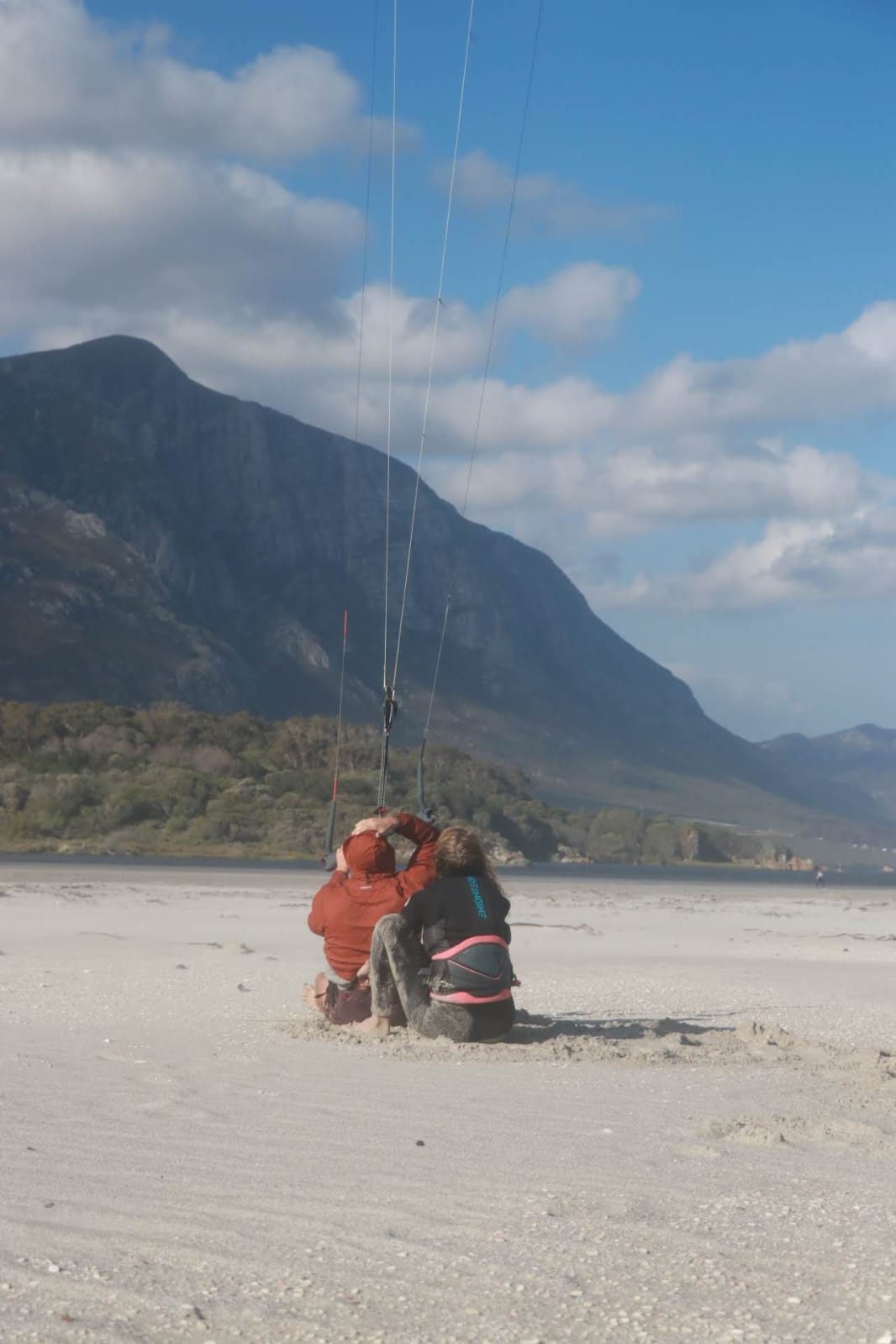
- Level 1, Discovery (roughly hours 1 to 3): wind theory, safety systems, setting up the kite, flying a small trainer kite and then a full-size kite on the beach. Lots of standing on sand looking up.
- Level 2, Intermediate (roughly hours 4 to 8): into the water. Body-dragging, which is letting the kite pull you through the water without a board, recovering your board, and your first water starts.
- Level 3, Independent (hours 9 to 12 and beyond): riding both directions, staying upwind, self-rescue and reading a spot so you can kite without an instructor.
Most people need somewhere between 9 and 15 hours of instruction to become independent, spread over four to six sessions. If you wakeboard or windsurf you might be quicker; if you're starting from scratch you might need a little longer, and that's completely normal. The one tip everyone agrees on: a two-hour taster is great fun, but it won't get you riding. Book a course.
Schools provide everything you need to learn: the kite, board, harness, wetsuit, helmet and impact vest. You bring sunscreen, a towel and patience.
What lessons cost in Cape Town in 2026
Prices vary by school and by whether you're taught alone or in a pair, but as a rough guide from schools in Blouberg this season:
- Private (one-to-one): around R1,300 to R1,400 per hour. A two-hour private session is around R2,800, and a full 10 to 12 hour private course roughly R12,500 to R14,500.
- Semi-private or group (two students, one instructor): around R750 to R950 per hour. A nine-hour course is roughly R7,700 and twelve hours around R9,700.
- Full beginner packages of 12 to 15 hours from around R9,700 to R14,500 depending on group size.
For Europeans, that works out at roughly €40 to €70 an hour. That's good value compared with most European kite spots, and you get a six-month season of wind to practise in afterwards. Prices change every season and include VAT, so check the school's current list before you book.
When to come as a beginner
The wind season runs October to March. December, January and February have the strongest, most consistent wind, which is fantastic once you can ride but can be overpowering for a first lesson. Many instructors quietly prefer teaching in October, November and March: still plenty of wind, but a touch lighter, and the beach is quieter. It's also cheaper to stay and easier to book lessons at short notice. For the month-by-month picture read our wind guide.
Whenever you come, allow a buffer. The Cape Doctor is reliable but not a timetable. If you plan a five-day course into a ten-day trip, you'll get it done. Plan it into five days and you'll be watching the trees.
Choosing a school
Blouberg has several established, IKO-certified schools, plus independent instructors who have taught here for decades. A few things to ask:
- Is the instructor certified (IKO or VDWS) and how many seasons have they taught in Cape Town?
- Do they use radio helmets so you can hear instructions in the water?
- Where will the first lessons be, beach or lagoon, and is transport included?
- What's the maximum group size?
- What happens to prepaid hours if the wind doesn't show?
Khaya isn't a kite school, but after seven seasons we know the instructors up and down this coast pretty well, and we know who's patient, who's safety-first and who has a knack for getting nervous beginners riding. Message us your level and what you'd love to get out of the trip, and we'll happily connect you with someone who fits. We can also sort a car-share to the lagoon with other guests.
What to bring, and what happens after
You need surprisingly little: swimwear, a rash vest or a thin wetsuit for under the school's suit if you feel the cold, reef-safe sunscreen and a hat. The Atlantic here is 13 to 17°C, so the 4/3 wetsuit the school hands you is not optional. Our packing guide covers the rest.
Once you're independent, the learning curve is all about hours on the water. This is where staying in Blouberg rather than in town pays off: you can get a short session in whenever the wind allows, borrow or rent gear through the shops, and ride with other guests who were beginners a season ago. Kite storage and a rinse station are at the house, so gear lives here, not in a rental car.
Where to stay while you learn
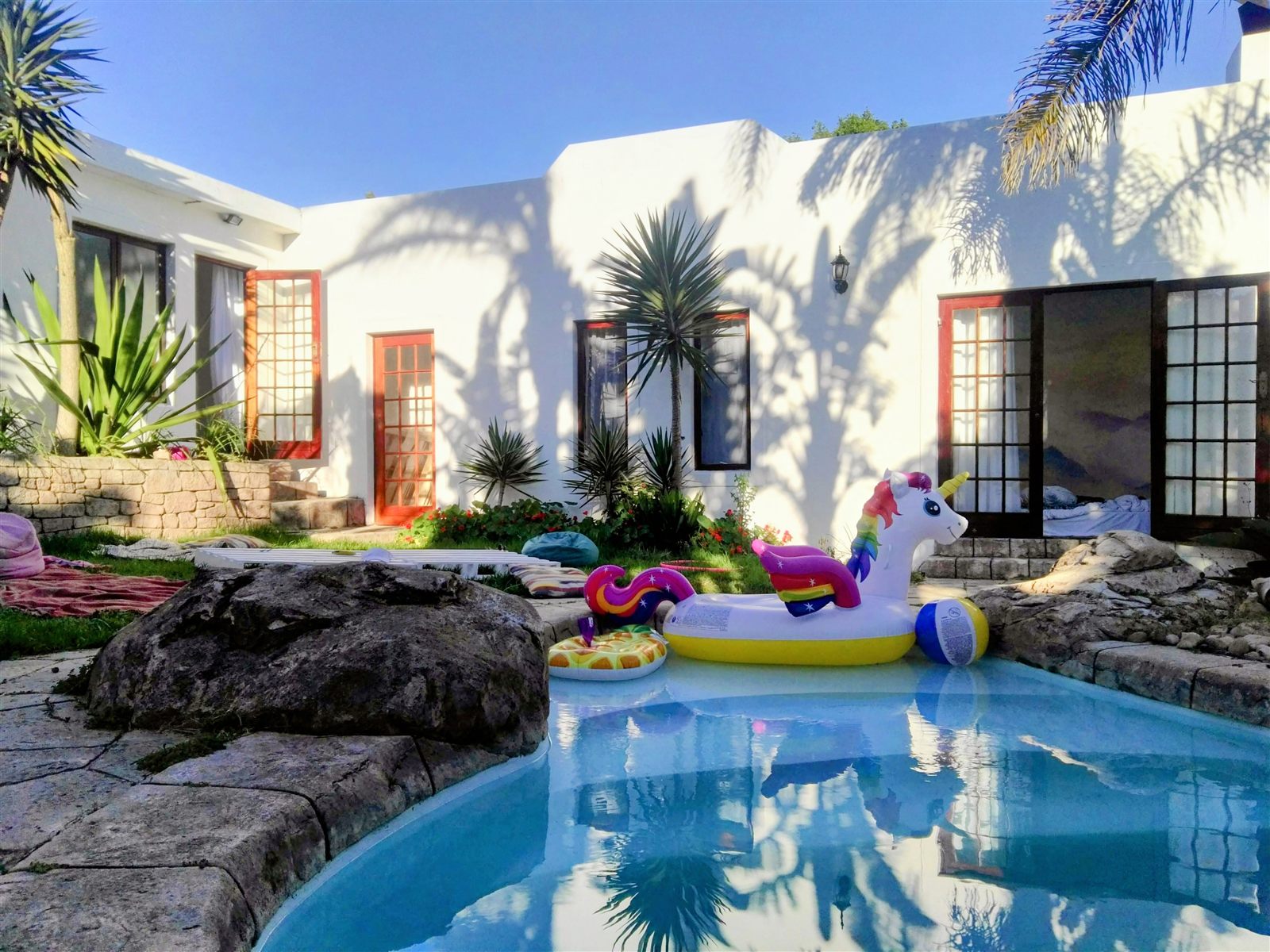
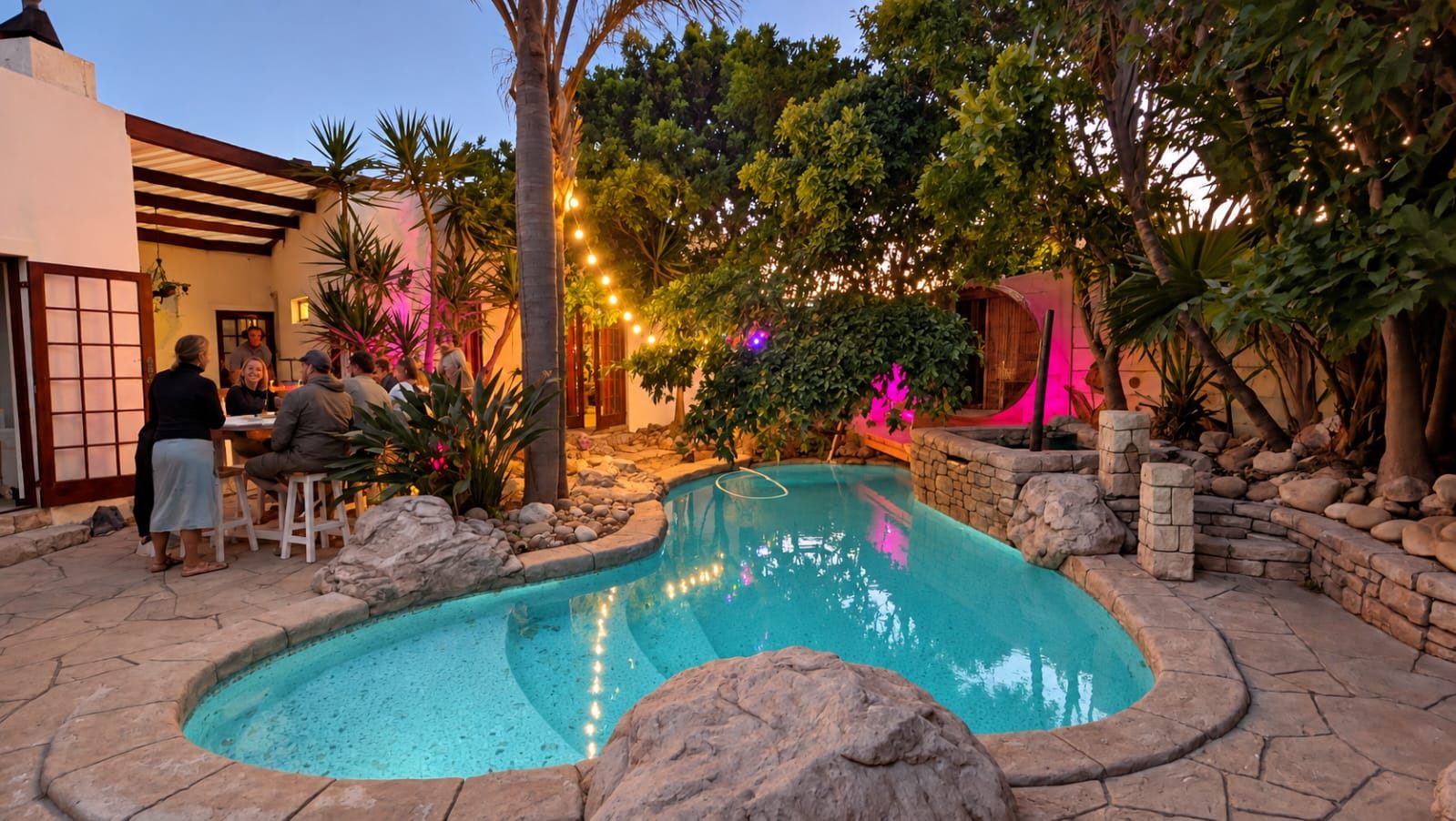
Learning takes a week or more, so where you stay matters. Khaya Kite & Yoga House is an eight-minute walk from Kite Beach, with private rooms and dorm beds, a pool, morning yoga in the garden that is very kind to sore beginner shoulders, a sauna and hot tub for the evenings, a communal kitchen and a house full of kiters at every level. A lot of guests book two weeks to complete a course, get hooked, and stay on. Long-stay discounts start at 30 nights.
Ready to plan your first kite trip? Check the booking calendar or message us on WhatsApp at +27 72 377 0575 and we'll help you line up lessons and a place to stay.